Barangay Clearance Certificate Application Philippines 2026
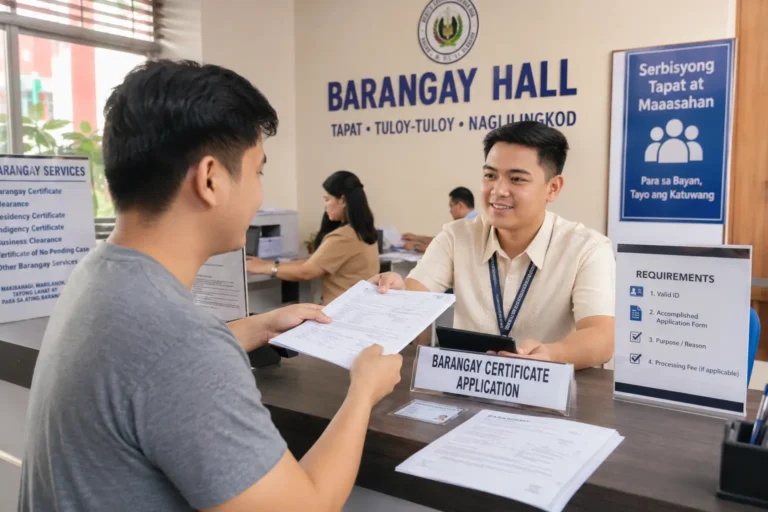
A barangay clearance certificate Philippines document is one of the most commonly requested records for Filipinos. Whether you are applying for a job, starting a small business, processing government requirements, or proving your place of residence, this certificate is often needed as part of the application process.
Many people assume it is just a simple community document, but it serves an important purpose. It confirms that you are a resident of a specific barangay and that you have no known issues or complaints recorded within the community. Because of this, government offices, employers, and licensing agencies frequently ask for it.
Common uses of a barangay clearance certificate include:
- Employment and job applications
- Business permit applications and renewals
- Residency and address verification
- Government transactions and clearances
- Scholarship and school requirements
- Permit and license applications
Understanding how the barangay clearance certificate Philippines process works can help you avoid delays when submitting important documents. Before applying, it is useful to know the requirements, fees, validity period, and the situations where this certificate may be required.
What Is a Barangay Clearance Certificate?
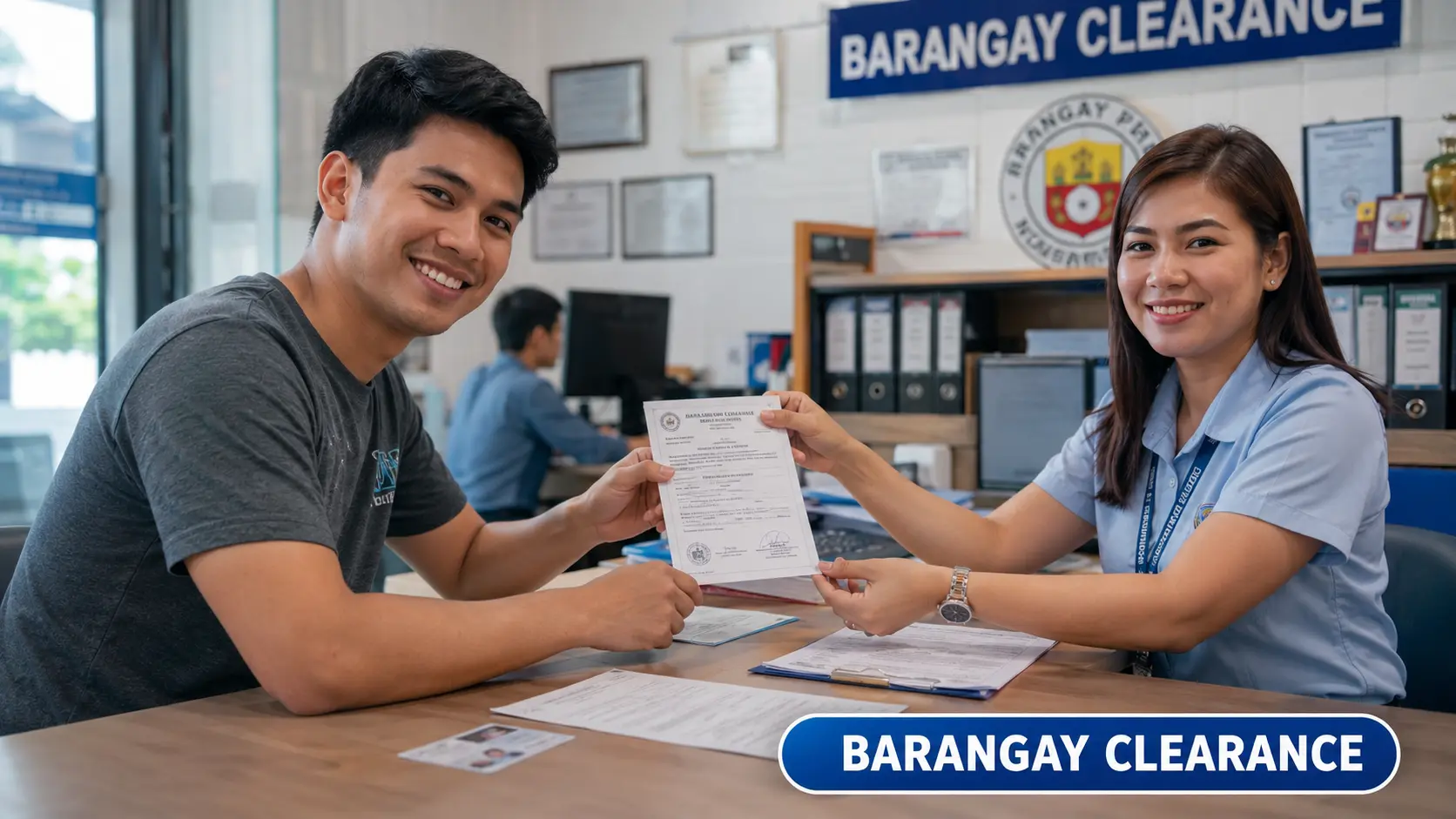
A Barangay Clearance Certificate is an official document issued by the local barangay office in the Philippines. It confirms that a person is a resident of the barangay and has no known issues, complaints, or violations recorded within the community at the time of issuance.
Many people need this document when applying for jobs, starting a business, opening a bank account, requesting government documents, or completing other official transactions. Because the barangay is the smallest local government unit in the country, it plays an important role in verifying a resident’s identity and community standing.
The barangay clearance certificate Philippines residents obtain is often one of the first documents requested before other permits or clearances can be processed. It serves as a local verification record that supports many personal and professional applications.
The primary functions of a Barangay Clearance Certificate include:
- Confirming a person’s current residency within a barangay.
- Verifying that the resident has no known community disputes or complaints on record.
- Supporting applications for employment, business permits, and government services.
- Serving as a local identification and verification document.
- Helping government agencies and private organizations confirm an applicant’s community status.
For example, a first-time job applicant may be asked to submit a barangay clearance as proof that they live in a specific area. Likewise, a small business owner may need it before applying for a business permit.
Because of its practical value, the barangay clearance certificate Philippines residents receive is considered an important supporting document for many day-to-day legal and administrative processes.
Why Barangay Clearances Are Important
A Barangay Clearance does more than confirm where you live. It helps establish your credibility within your local community.
Government offices, employers, schools, and private institutions often request this document because it shows that you are a recognized resident of the barangay and have a good standing within the area. This makes verification faster and easier during application processes.
A barangay clearance is especially important when:
- Applying for a new job.
- Starting a small business.
- Requesting permits or licenses.
- Processing government documents.
- Proving residency for official transactions.
For instance, if an employer needs proof of your address, a barangay clearance can serve as supporting evidence. If you are opening a business, it may be required before other permits can be issued.
Having a valid barangay clearance can help prevent delays and make many application processes smoother. Before starting any application, it is helpful to check the latest requirements from your local barangay office.
Common Uses of a Barangay Clearance Certificate
A barangay clearance certificate philippines document is often required to prove that a person is a resident of a barangay and has no known issues within the community. While the exact requirement may vary, many employers, government offices, and licensing agencies ask for this certificate before processing applications.
Employment Applications
When applying for a job, some employers may request a Barangay Clearance as part of the pre-employment requirements. It helps verify your identity, address, and standing within your local community.
Common situations where it may be required include:
- First-time job applications
- Government employment applications
- Local company hiring processes
- Contractual or project-based employment
- Background verification checks
For example, a fresh graduate applying for their first job may be asked to submit a Barangay Clearance along with other documents such as a police clearance and valid identification. Having the certificate ready can help avoid delays during hiring.
Business Permit Applications
Planning to start a small business often involves securing several permits. A Barangay Clearance is commonly one of the first documents required before a business permit can be issued or renewed.
It may be requested for:
- New business registrations
- Business permit renewals
- Home-based business applications
- Small retail shops and service businesses
- Market stall or kiosk operations
Local government offices use the clearance to confirm that the business operates within the barangay and complies with community regulations. For many entrepreneurs, obtaining this document is an important step before proceeding with municipal or city permit applications.
Government Transactions and Other Legal Purposes
Beyond employment and business matters, a Barangay Clearance is also used for various government and legal transactions. Different agencies may require it as supporting proof of residence or good community standing.
Common examples include:
- Applying for government-issued IDs
- Requesting permits and licenses
- Scholarship applications
- Housing and community assistance programs
- Opening certain legal or administrative records
- Supporting affidavit or documentation requirements
For instance, an applicant seeking financial assistance from a government program may need to submit a Barangay Clearance together with other supporting documents. Because requirements can vary, it is always best to check with the agency requesting the certificate before filing your application.
Who Can Apply for a Barangay Clearance Certificate?
A barangay clearance is not limited to one type of applicant. It can be requested by residents who need proof of identity, address, or good standing within their barangay. Whether you are applying for a job, starting a business, or processing government documents, you may be eligible to request a clearance if you meet the local requirements.
Most barangays issue the certificate to individuals who have an established residence in their area and have no unresolved community-related concerns. The exact requirements may vary slightly from one barangay to another, but the basic eligibility rules are generally the same across the country.
The following individuals can usually apply for a barangay clearance certificate Philippines:
- Permanent residents of the barangay
- Individuals who have lived in the barangay for the minimum period required by local officials
- Employees who need a clearance for work applications
- Students applying for scholarships, internships, or school requirements
- Business owners seeking permits or business registration
- Individuals processing government IDs, licenses, or other official documents
- Residents requesting proof of address or community residency
- Applicants needing supporting documents for legal or financial transactions
For example, a first-time job seeker may need a barangay clearance as part of employment requirements. A small business owner may also be asked to submit one before obtaining a business permit.
If you recently moved to a new area, check with your barangay office first. Some barangays may require proof of residency before issuing the certificate.
Note: Before applying, make sure your identification documents and residency information are updated to avoid delays during processing.
Requirements for Obtaining a Barangay Clearance Certificate
Getting your documents ready before visiting the barangay office can save time and prevent unnecessary delays. Most barangays require applicants to prove their identity and residency before issuing a clearance. While requirements may vary slightly depending on the location, the basic documents are generally the same across the Philippines.
Applicants are commonly required to submit:
- A valid government-issued ID
- Proof of residency within the barangay
- A completed application form
- Payment of the applicable barangay clearance fee
- A Community Tax Certificate (Cedula), if required by the barangay
- A recent ID photo, in some cases
You should also be prepared to provide personal information such as your full name, address, date of birth, civil status, and the reason for requesting the clearance.
Some barangays may conduct a brief residency verification before releasing the document. This is especially common for first-time applicants or individuals who have recently moved into the community. Bringing complete and accurate documents can help speed up the approval process for your barangay clearance certificate Philippines.
If you are uncertain about local requirements, it is always a good idea to contact your barangay office in advance. Requirements and procedures can differ from one barangay to another.
Identification Documents Accepted
A valid ID is one of the most important requirements when applying for a barangay clearance. It helps barangay officials verify your identity and ensures that the document is issued to the correct person.
Commonly accepted IDs include:
- Philippine National ID
- Driver’s License
- Philippine Passport
- UMID Card
- Postal ID
- Senior Citizen ID
- PRC ID
- Voter’s ID, where accepted
- School ID for students, often accompanied by supporting documents
In addition to a valid ID, applicants are usually required to show proof that they live within the barangay. Accepted proof of residency documents may include:
- Utility bills showing the applicant’s address
- Lease or rental agreements
- Homeowners’ association certifications
- Voter registration records
- Barangay residency certificates
- Official correspondence displaying the current address
To avoid delays, make sure the name and address on your documents match the information provided on your application whenever possible.
Additional Requirements for Special Cases
Certain applicants may need to provide extra documents depending on their circumstances.
Business owners often need additional paperwork related to their business activities. This may include business registration documents, permit applications, or proof that the business operates within the barangay’s jurisdiction.
Students may be asked to present a current school ID, certificate of enrollment, or supporting documents from a parent or guardian if required by the barangay.
For new residents, barangay officials may request additional proof of residency before issuing a clearance. This could include a lease agreement, proof of occupancy, or certification from a landlord, homeowner, or property manager.
Because requirements can vary, checking with the local barangay office before applying can help ensure you bring all necessary documents and avoid repeat visits.
How to Get a Barangay Clearance Certificate in the Philippines
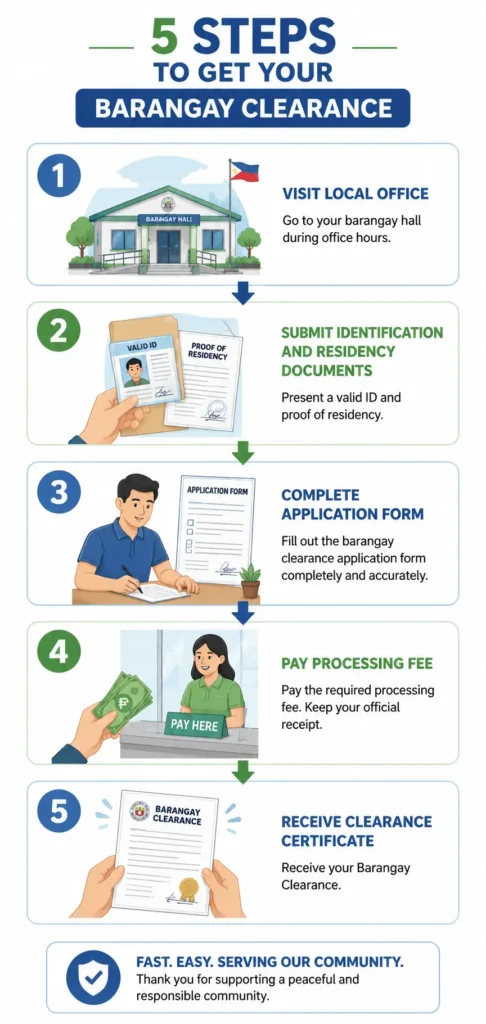
Getting a barangay clearance certificate Philippines is usually a simple process when you know the correct steps. Whether you need it for a job application, business permit, school requirement, or other official purpose, preparing the right documents can help you avoid delays.
Most barangays process applications on the same day, making it one of the easiest local government documents to obtain. Follow the steps below to complete your application smoothly.
Step 1 – Visit Your Barangay Hall
The first step is to go to the barangay hall that has jurisdiction over your current place of residence. Applications are generally accepted during regular office hours, although schedules may vary by barangay.
Before visiting, it is a good idea to check whether your barangay has specific requirements or office schedules. Some barangays may have designated counters for clearance applications.
If you recently moved to the area, make sure your residency can be verified before applying.
Step 2 – Submit the Required Documents
Once you arrive at the barangay hall, submit the documents requested by the staff. Requirements may differ slightly between barangays, but commonly include:
- Valid government-issued ID
- Proof of residence
- Completed application form (if available)
- Previous clearance, if required for renewal
Barangay personnel will review your documents to confirm your identity and residency. If any information is missing, you may be asked to provide additional proof before your application can proceed.
Note: Having original documents and photocopies ready can help speed up the process.
Step 3 – Complete the Application Form
After document verification, you will be asked to fill out an application form. The form typically requests basic personal information such as:
- Full name
- Address
- Date of birth
- Civil status
- Purpose of the clearance
Write all details clearly and accurately. Even small errors in your name or address can create problems when using the barangay clearance certificate Philippines for official transactions.
Review the form before submitting it to avoid corrections later.
Step 4 – Pay the Applicable Fee
Most barangays charge a small processing fee for issuing a clearance certificate. The amount varies depending on local regulations and the purpose of the document.
After your application is checked, proceed to the cashier or designated payment area. Keep the official receipt because it may be required during release.
If you are unsure about the fee, ask the barangay staff before making payment.
Step 5 – Receive Your Barangay Clearance
After payment and final verification, the barangay will process your application. In many cases, the clearance is released on the same day, although processing times may vary.
Before leaving, carefully check the information printed on the document, including:
- Full name
- Address
- Date issued
- Purpose of issuance
If you notice any mistakes, report them immediately so corrections can be made before the certificate is finalized.
Once released, your barangay clearance certificate Philippines is ready for use in employment applications, business transactions, government requirements, and other official purposes.
Note: To avoid delays, always verify current requirements with your local barangay office before applying.
Barangay Clearance Fees and Processing Time
Before applying, many people want to know two things: how much the document costs and how long it will take to receive it. The good news is that the barangay clearance fee is usually affordable, and in most cases, the document can be issued on the same day if all requirements are complete.
Fees and processing times can vary depending on the barangay, city, or municipality. Some local government units may charge additional administrative fees, while others keep the cost minimal.
| Location Type | Typical Barangay Clearance Fee | Estimated Processing Time |
|---|---|---|
| Small barangays | ₱20–₱50 | 15–30 minutes |
| Urban barangays | ₱50–₱150 | 30 minutes–1 day |
| Business-related clearances | ₱100–₱300+ | 1–3 working days |
The exact barangay clearance fee depends on factors such as:
- Purpose of the clearance
- Local government policies
- Business or personal use
- Additional certifications requested
For example, a resident applying for employment may pay a lower fee than someone requesting a clearance for business registration.
As for barangay clearance processing time, applicants with complete documents often receive their clearance during the same visit. However, delays can happen if:
- Records need verification
- Applicant information is incomplete
- There are pending community issues that require review
- The barangay office experiences heavy applicant volume
To avoid delays, prepare all required documents before visiting the barangay office.
Validity Period of a Barangay Clearance Certificate
Before using your clearance for a job application, business permit, or government transaction, it is important to check if it is still valid. Many people assume a barangay clearance can be used indefinitely, but that is not always the case.
The barangay clearance validity period typically depends on the purpose for which the document was issued and the policies of the issuing barangay. In many cases, a barangay clearance is considered valid for six months to one year from the date of issuance. However, some employers, agencies, or institutions may require a more recently issued clearance.
For example:
- A company hiring new employees may only accept a clearance issued within the last three to six months.
- A business owner renewing permits may need to obtain a new clearance each year.
- Some government offices may request an updated clearance even if the previous one has not technically expired.
Because requirements vary, it is always best to verify the validity period with the office or organization requesting the document.
If your clearance has expired or is no longer accepted for its intended purpose, you will need to apply for a new one through your barangay office. Renewal is usually straightforward as long as your residency records remain updated.
To avoid delays, check the expiration requirements before submitting documents. You may also want to review the application process in advance.
Understanding the barangay clearance validity period helps ensure that your document remains acceptable when you need it most.
Difference Between Barangay Clearance and Police Clearance
Many people assume that a Barangay Clearance and a Police Clearance are the same document. However, they serve different purposes and are issued by different government offices. Knowing the difference can help you avoid submitting the wrong document and prevent delays in your application.
Barangay Clearance
A Barangay Clearance is issued by the local barangay where you live. It confirms that you are a resident of the community and that you have no known issues or complaints recorded at the barangay level. This document is commonly required for job applications, business permit applications, proof of residency, and various local government transactions.
Police Clearance
A Police Clearance is issued by the Philippine National Police (PNP). Unlike a Barangay Clearance, it focuses on checking police records and verifying whether a person has any criminal or police-related record in the system. It is often required for employment, travel, licensing, immigration, and other official transactions that require a broader background check.
When You Need Both Documents
Some applications require both a Barangay Clearance and a Police Clearance because they serve different purposes.
You may be asked to provide both documents when:
- Applying for certain private or government jobs
- Processing business permits
- Completing licensing requirements
- Submitting documents for immigration or overseas employment
- Handling transactions that require multiple background checks
For example, an employer may use a Barangay Clearance to confirm your local residency and community standing, while a Police Clearance is used to verify that there are no relevant police records associated with your name.
When an application checklist includes both documents, it is important to secure each one separately. Having both clearances ready can help prevent delays and keep your application process moving smoothly.
Common Reasons a Barangay Clearance Application May Be Delayed
Most barangay clearance applications are processed quickly. However, some applicants face delays because of missing documents, incorrect information, or local verification requirements. Knowing these common issues can help you avoid unnecessary waiting time.
- Incomplete documents – One of the most common causes of delay is failing to submit all required documents. Always check the current barangay clearance requirements before visiting the barangay office.
- Incorrect personal information – Errors in your name, address, birth date, or other details may require corrections before the clearance can be issued.
- Proof of residency issues – Some barangays require evidence that you live within their jurisdiction. Missing or outdated proof of address can slow down the process.
- Unsettled community concerns – In certain cases, barangay officials may need to verify complaints, disputes, or records involving the applicant before approving the clearance.
- Pending verification by barangay officials – Applications sometimes require additional checks, especially for first-time applicants or residents who recently moved into the area.
- Applying during busy periods – Processing may take longer during community events, election periods, or days when many residents are requesting documents.
- Unpaid fees – Some barangays charge a small processing fee. Delays can occur if payment has not been completed or properly recorded.
- Using outdated requirements – Requirements can change over time. Confirm the latest barangay clearance requirements with your local barangay office before applying.
To avoid delays, prepare all documents in advance, review your information carefully, and ask the barangay office about any special requirements that may apply to your situation.
Tips for a Faster Barangay Clearance Application
Applying for a barangay clearance is usually simple, but small mistakes can cause delays. A little preparation can help you complete your barangay clearance application quickly and avoid multiple trips to the barangay office.
Use this checklist before you apply:
- Bring a valid government-issued ID with your current address whenever possible.
- Prepare additional proof of residency if requested, such as utility bills or community records.
- Confirm the office hours of your barangay before visiting.
- Fill out application forms carefully and double-check all information.
- Bring enough cash for the required processing fee.
- Keep photocopies of your identification documents ready.
- Arrive early, especially during busy periods when many residents are applying for documents.
- Make sure your name, address, and personal details match the information on your ID.
- Ask in advance if your barangay offers online pre-registration or appointment scheduling.
- Keep your official receipt and any reference numbers until you receive your clearance.
For most applicants, delays happen because of missing documents or incorrect information. Taking a few minutes to review your requirements before visiting can make the barangay clearance application process much smoother.
If you are applying for employment, business registration, or another official purpose, it is also helpful to verify all requirements beforehand.
Frequently Asked Questions About Barangay Clearance Certificates
Conclusion
A barangay clearance certificate philippines is an important document used for employment, business, and many government transactions. The application process is usually simple if you prepare the required documents in advance. Always check your barangay’s specific requirements, fees, and processing times before applying. Keeping your clearance updated can help avoid delays when you need it for official purposes.
If you’re planning to apply soon, review the latest guidelines from your local barangay office to get your barangay clearance certificate philippines quickly and smoothly.